How to Wash and Care for Custom Bathrobes: Laundering, Storage and Robe Lifespan
Custom bathrobes last longest when each fabric is washed and dried the way it was built to be: terry and waffle without fabric softener, velour-faced robes with gentle heat, and quick-dry microfibre on a low setting. Get Custom Bathrobes embroiders logos and names that hold up to this routine, so good laundry habits protect both the robe and the branding on it.
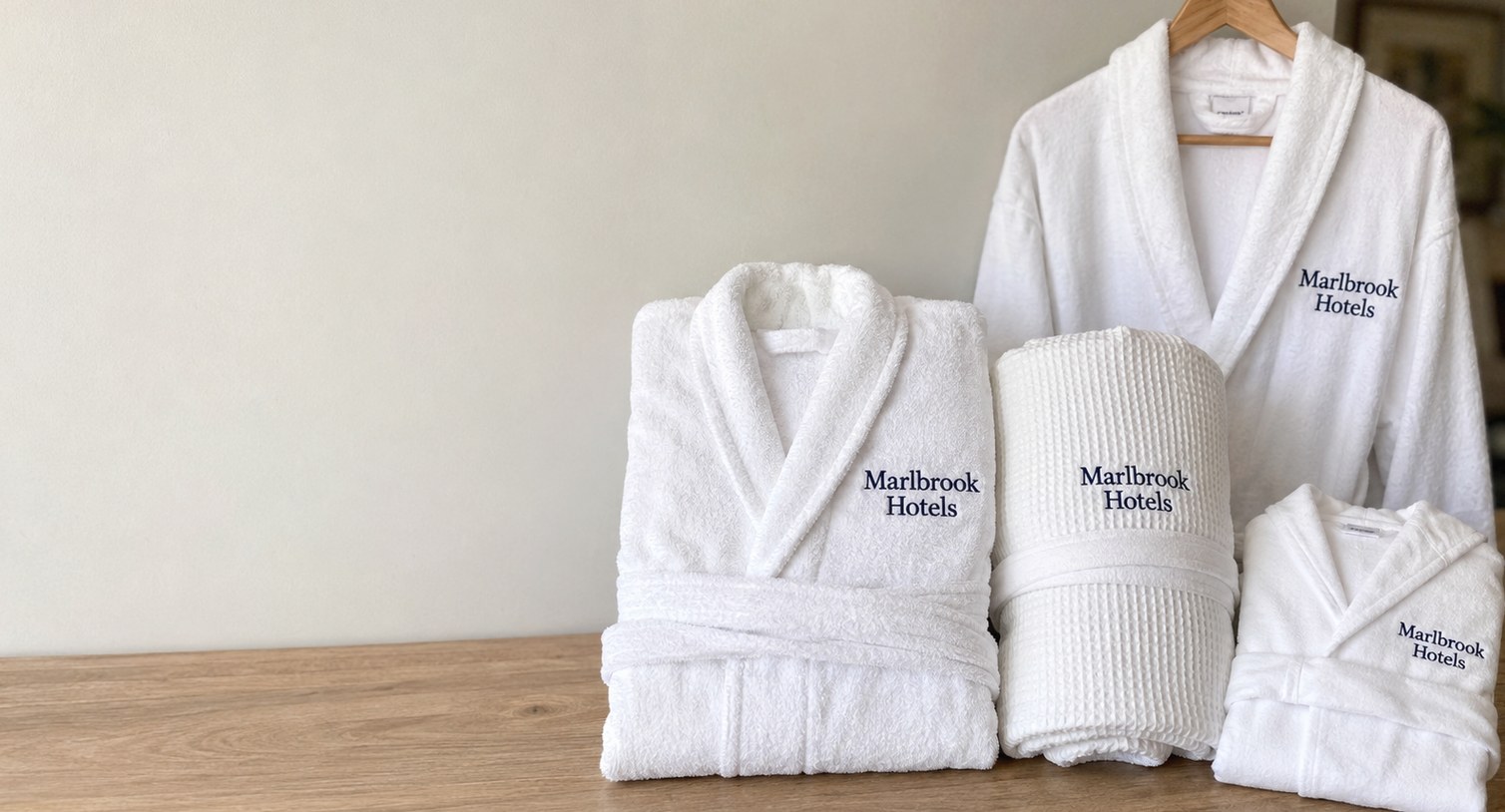
- Terry, waffle, velour-faced and quick-dry microfibre robes each need slightly different care
- Fabric softener coats cotton loops and reduces absorbency over time
- Over-drying on high heat is the most common cause of stiff, rough robes
- Embroidered logos and names last as long as the robe when washed with similar colors
- Free mockup within 24 hours and about 2 weeks to produce replacement or reorder robes
How should you wash custom bathrobes so they last?
Custom bathrobes last longest when they are washed in warm rather than very hot water, with a measured dose of mild detergent, no fabric softener on cotton robes, and enough room in the drum for the robes to move freely. Those four habits do more for robe lifespan than any premium detergent or special program.
A bathrobe is a heavy, absorbent garment, and it holds a lot of water and detergent in a wash. Overloading the machine means the robes are not rinsed clean, and leftover detergent builds up in the cotton loops, making the robe feel stiff and smell stale. Washing fewer robes per load, or choosing an extra rinse, keeps the fabric soft and absorbent.
- Sort by color and fabric. White hotel terry robes go together; dark spa robes and colored children’s robes go in separate loads.
- Close the belt loops and tie the belt. A loose belt wraps around other robes and pulls loops.
- Keep hook-and-loop fasteners and zippers out of the load. They snag terry and waffle faster than anything else in a laundry.
- Dry promptly. A wet robe left in the drum overnight is the start of a musty smell that is hard to remove.
Get Custom Bathrobes asks how robes will be laundered when you request a quote, because a hotel with an outsourced laundry and a vacation rental host washing at home need different fabric advice before the order is placed.
How does care differ between terry, waffle, velour-faced and microfibre bathrobes?
Each robe fabric on Get Custom Bathrobes has its own care priorities: cotton terry needs absorbency protected, waffle needs its texture kept open, velour-faced robes need the soft face protected from heat, and quick-dry microfibre needs low heat and no softener. The table below sets out what matters most for each style.
| Robe style | Wash | Dry | Watch out for |
|---|---|---|---|
| Hotel terry robes | Warm, mild detergent, no softener | Tumble on medium until just dry | Softener build-up and pulled loops |
| Waffle robes | Warm, not overloaded | Tumble on medium or line dry | Over-drying, which flattens the weave and causes shrinkage |
| Velour-faced robes | Warm, gentle cycle, similar colors | Tumble on low, shake out while warm | High heat, which flattens and roughens the velour face |
| Quick-dry microfibre robes | Cool to warm, no softener | Tumble on low or air dry | High heat and lint transfer from cotton loads |
Velour-faced robes are sheared terry on the outside, so the face is softer and plusher than plain terry but more sensitive to heat. Microfibre dries quickly on its own and rarely needs long dryer time, which is part of why pools and gyms choose it. Waffle robes are light and breathable, and they keep their honeycomb texture best when they are taken out of the dryer slightly before they are bone dry.
Which laundry habits shorten the life of a bathrobe?
The laundry habits that shorten the life of a bathrobe most are using fabric softener on cotton, drying on high heat for too long, overloading the machine, and washing robes alongside abrasive items. Each one damages the fibers slowly, so the harm shows up as robes that feel thin, rough or less absorbent long before they look worn.
Fabric softener coats cotton loops with a waxy film. The robe feels soft for a few washes, then gradually stops absorbing water well, which defeats the purpose of a terry or waffle robe. If your laundry team wants softness, an extra rinse to remove detergent residue usually does more than softener.
High heat is the second culprit. Cotton fibers become brittle when they are dried hard again and again, and robes come out stiff and scratchy. Microfibre and velour faces can also flatten or glaze under high heat.
- Chlorine bleach weakens cotton and will fade colored robes and colored embroidery thread.
- Washing robes with jeans, kitchen cloths or workwear with hardware snags loops.
- Leaving robes damp in a hamper or laundry cart encourages odor and mildew.
- Ironing velour or microfibre robes crushes the surface.
None of these habits is unusual, which is why they are worth writing into a short care note for housekeeping, spa attendants or the people who receive gift robes.
How do you protect embroidered logos and names in the wash?
Embroidered logos and names on bathrobes are protected by the same habits that protect the robe itself: moderate water temperature, no chlorine bleach on colored thread, sorting by color, and avoiding long, hot dryer cycles. Good embroidery is stitched to last as long as the robe, so it rarely fails before the fabric does.
Get Custom Bathrobes digitizes each logo for the specific robe fabric, which means the stitch density and backing are chosen for terry, waffle, velour or microfibre. That preparation is what keeps an embroidered mark flat and readable after repeated laundering. You can read more about how stitching is matched to each fabric on the embroidered logo bathrobes page.
Where buyers run into trouble is with thread colors and cleaning products. A dark navy logo on a white hotel robe will survive almost any routine, but a bright red name on a white robe can be dulled by bleach-based stain removers. If your laundry relies on bleach to keep white robes bright, mention it when you request a quote, and the mockup can use a thread color that suits that routine.
- Treat stains near the embroidery with a gentle stain remover rather than scrubbing the stitches.
- Avoid pressing an iron directly on embroidery, especially on microfibre.
- For personalised guest robes, check names after the first wash so any issue is spotted early.
How should custom bathrobes be stored between uses and seasons?
Custom bathrobes should be stored completely dry, folded or hung in a cool, ventilated space away from direct sunlight, and never sealed in plastic while still slightly damp. Storage is where many robes pick up musty smells or yellowing that no amount of washing fully removes.
For daily use, hanging robes on wide hooks or padded hangers lets air reach the whole garment and keeps velour faces from creasing. Narrow wire hangers stretch the shoulders of heavy terry robes over time. In guest rooms, a robe that hangs on a hook after use should be collected and laundered rather than refolded for the next guest.
For seasonal storage, such as a pool club, beach club or summer resort closing for the off-season, wash the robes, dry them thoroughly, and store them folded in breathable cotton bags or lidded bins with some airflow. Label each bin with the robe style, color and logo so reopening is straightforward and you can see at a glance whether you need to top up stock.
- Keep stored robes away from heaters, which dry out fibers.
- Keep white robes out of sunlight, which can yellow cotton and fade colored embroidery.
- Rotate stock so the same robes are not always first off the shelf.
Rotation matters because robes that are washed far more often than the rest of the stock wear out first, which makes a reorder look urgent before the overall supply needs it.
How can you tell when a custom bathrobe needs replacing?
A custom bathrobe needs replacing when it no longer does its job: it stops absorbing water well, the fabric has thinned or frayed at the cuffs, hem and collar, stains no longer wash out, or the robe has shrunk enough to fit poorly. A robe that still looks presentable but feels rough or damp after use is already past its best for guests.
The places to check first are the cuffs, the pocket edges and the shawl collar, because those take the most handling. Pulled loops on terry can be trimmed level with scissors rather than pulled further, but a robe with many pulled or bald patches has reached the end of its guest-facing life.
Many hotels, spas and gyms move tired robes out of guest use rather than throwing them away. Older robes can serve staff, the laundry room or a back-of-house changing area, while fresh robes go to guests. Keeping the same robe style and logo on file makes that rotation simple, because a reorder can match the robes already in circulation.
- Pull robes that fail an absorbency or appearance check.
- Count what remains in good condition.
- Send the count, style and logo to Get Custom Bathrobes with your in-hand date.
- Approve the mockup, which arrives within 24 hours, and expect production in about 2 weeks.
How should care plans shape which bathrobes you order?
Your laundry setup should shape your bathrobe order as much as the look of the robe does. A property with a commercial laundry can handle heavy terry well, a vacation rental host washing at home may prefer lighter waffle robes that dry faster, and a pool or gym that needs quick turnaround between uses is usually best served by quick-dry microfibre.
Color is part of the same decision. White terry suits operations that rely on bright, consistent results and can bleach safely with the right thread colors, while darker spa robes hide makeup and oil marks but should be washed apart from whites. Children’s robes in colors or prints need gentle routines so the colors stay bright.
When you request a quote from Get Custom Bathrobes, include how and where the robes will be washed, how often, and who does the laundry. That detail lets the team recommend a robe style, color and thread choice that will still look right after months of use rather than only on delivery day. The mockup is free, revisions are unlimited, and you pay nothing until you approve the design, so you can compare two robe styles before deciding. Start with the custom quote form or read how it works.
Frequently asked questions
Does fabric softener make terry bathrobes less absorbent?
Fabric softener does make terry bathrobes less absorbent over time, because it leaves a waxy coating on the cotton loops that repels water. The robe may feel softer for a few washes, then start leaving guests damp. An extra rinse that removes leftover detergent usually keeps terry soft without that trade-off, which is why Get Custom Bathrobes recommends skipping softener on cotton robes.
Can colored custom bathrobes be washed with white hotel robes?
Colored custom bathrobes should be washed separately from white hotel robes, especially for the first several washes. Darker robes and colored children's robes can release dye that grays white terry, and white loads are often washed with brighteners that fade colored fabric. Sorting by color also protects embroidered logos, since thread color stays truer when it is not mixed with harsher white-load products.
How should velour-faced bathrobes be dried to keep the face soft?
Velour-faced bathrobes keep their soft face best when they are tumble dried on low heat and taken out while still slightly warm. Give each robe a firm shake before hanging so the sheared pile stands up again. High heat flattens and roughens the velour surface, and that change is difficult to reverse, so gentle drying matters more on velour than on plain terry.
Is chlorine bleach safe on bathrobes with embroidered logos?
Chlorine bleach is not a good choice for bathrobes with colored embroidered logos, because it fades thread and weakens cotton fibers over repeated washes. White robes with white or very dark thread tolerate it better, but gentler oxygen-based whiteners are kinder. If your laundry depends on bleach, tell Get Custom Bathrobes when requesting a quote so the mockup can suggest a suitable thread color.
Why do terry bathrobes get pulled loops, and can they be fixed?
Terry bathrobes get pulled loops when the cotton catches on jewelry, zippers, hook-and-loop fasteners or rough surfaces. A single pulled loop can be trimmed level with sharp scissors; pulling it makes the snag longer. Washing robes away from items with hardware and tying the belt before each wash prevents most snags, which keeps terry robes presentable for guests much longer.
How should bathrobes be stored when a pool or resort closes for the season?
Bathrobes stored for an off-season should be washed, dried completely and folded into breathable cotton bags or ventilated bins in a cool, dark room. Sealing robes in plastic while any moisture remains invites mildew. Label each container with robe style, color and logo, so the team knows what is on hand at reopening and can plan any reorder with Get Custom Bathrobes in good time.
Can quick-dry microfibre bathrobes go in a hot tumble dryer?
Quick-dry microfibre bathrobes should not go in a hot tumble dryer, because high heat can glaze or flatten the synthetic fibers and make the robe feel slick. A low setting or air drying works well, and microfibre dries quickly either way. Washing microfibre apart from cotton towels also stops lint from clinging to the fabric and dulling its finish.
What makes custom bathrobes feel stiff after washing?
Custom bathrobes usually feel stiff after washing because of detergent residue, hard water minerals or over-drying on high heat. Using less detergent, adding an extra rinse and removing robes from the dryer as soon as they are dry usually restores softness. Shaking each robe out before folding or hanging also helps cotton loops stand up instead of drying flat and rough.
How can a hotel stop its bathrobes from smelling musty?
Hotel bathrobes smell musty when they sit damp in hampers, carts or washing machines before drying. Collect used robes promptly, wash them without overloading the machine, and dry them fully before folding. Storing clean robes in a ventilated linen room rather than a closed cupboard helps too. Once mildew odor sets deep into terry, even repeated washing may not fully remove it.
Should care instructions be included with gift bathrobes?
Including care instructions with gift bathrobes is a good idea, because recipients often wash a new robe the same way as jeans or towels. A short card asking for warm water, no fabric softener, low-to-medium drying and color sorting keeps the embroidered robe looking right for years. Get Custom Bathrobes can suggest care wording when you request a quote.
Which bathrobe fabric is easiest to care for in a busy laundry?
Quick-dry microfibre and waffle bathrobes are usually the easiest to care for in a busy laundry, because both are lighter than heavy terry and need far less dryer time. Hotel terry robes stay the favorite for guest rooms but need more drying capacity. Get Custom Bathrobes can recommend a robe style once you share how and where your robes will be washed.
Get a free mockup for your bathrobes
Send your logo or idea and the quantity you have in mind. Get Custom Bathrobes returns a free mockup within 24 hours, you approve the design before anything is produced, and standard turnaround is about two weeks with faster options available. Get a custom quote.